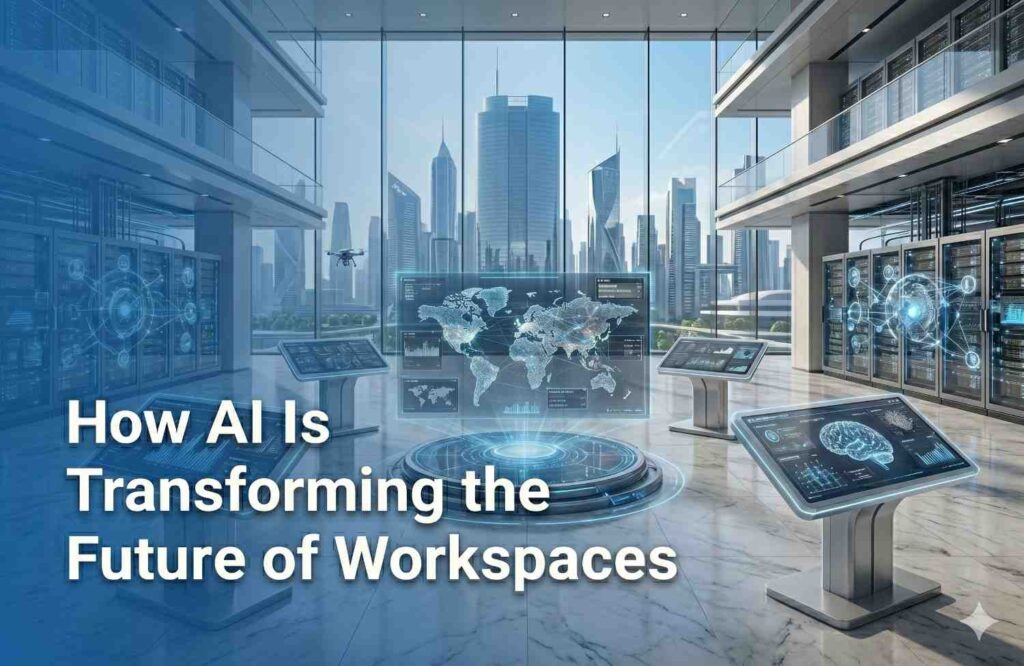
In 2026, AI has evolved from a digital tool into the primary architect of the modern workspace. This article explores how generative design, digital twins, and related technologies create intuitive, human-centric environments. By automating logistics and prioritising wellness, AI transforms the office into a high-performance sanctuary for collaboration.
Step into the workspace of 2026, where the “daily grind” has been reimagined as a sophisticated symphony of human ingenuity and machine intelligence. The traditional office is no longer a static graveyard of cubicles; it has evolved into a living, breathing ecosystem that anticipates your needs before you even voice them.
In this new era, AI acts as the silent architect, seamlessly blending data-driven efficiency with a deep, renewed focus on the human experience. From generative layouts that spark spontaneous innovation to digital twins that optimise our physical comfort, the modern workplace has become a strategic sanctuary for growth.
Explore how these intelligent environments are dismantling old hierarchies to build a more intuitive, flexible, and human-centric future of work.
Generative Design and the Evolution of Spatial Layouts
For decades, office design relied on historical data and static floor plans. Today, artificial intelligence utilises generative algorithms to create layouts that prioritise both efficiency and human well-being.
Modern tools now ingest spatial data to analyse daylight exposure, acoustics, and foot traffic patterns in seconds. This allows organisations to move away from the rigid cubicle farms of the past toward fluid, “AI-ready” ecosystems.
Designers are currently using AI to simulate how people move through a building, ensuring that social hubs and quiet zones are perfectly balanced. These algorithms can generate thousands of layout options, selecting the ones that maximise spontaneous interactions.
By optimising the distance between desks and communal areas, AI helps foster the “watercooler moments” that drive innovation. This level of precision ensures that every square foot of an office serves a purpose, whether it is for deep focus or creative brainstorming.
Operational Efficiency Through Real-Time Digital Twins
One of the most significant shifts in workspace management is the implementation of digital twins. A digital twin is a virtual replica of a physical office that mirrors its operations in real time. Integrated with AI, these models allow facilities managers to monitor everything from energy consumption to air quality and occupancy levels.
- Real-time Optimisation: Sensors track which areas are most popular, allowing AI to suggest reconfiguring underutilised zones into more productive spaces.
- Preventive Maintenance: AI predicts when a lighting system or HVAC unit might fail, scheduling repairs before they disrupt the workday.
- Environmental Control: Smart systems adjust temperature and lighting based on the number of people in a room, significantly reducing carbon footprints while maintaining peak comfort.
This proactive approach shifts workplace management from reactive troubleshooting to a model focused on seamless experience. When the physical environment adapts to the needs of the people within it, stress levels drop, and productivity rises.
Dynamic Real Estate: Adapting to Flexible Workforce Demands
As AI reshapes team structures and project timelines, the need for flexible real estate has skyrocketed. Many organisations are moving toward an “elastic portfolio” strategy. Instead of committing to thirty-year leases on massive corporate headquarters, companies are blending core hubs with agile, short-term options.
In this landscape, coworking spaces provide the necessary agility for firms to scale their physical footprint up or down in response to real-time project needs. These flexible environments allow teams to gather in high-quality, tech-enabled settings without the burden of long-term capital expenditure. This flexibility is vital because AI-driven workflows often require specialised, temporary setups for intensive collaborative sprints or specialised training sessions.
The Office as a Strategic Hub for Continuous Upskilling
Research from 2026 indicates that the most frequent users of AI are also the most active learners. For these “power users,” the office has become a primary hub for skill-building. While routine tasks are increasingly automated, the value of human work has shifted toward judgment, empathy, and complex problem-solving. These are skills best sharpened through peer-to-peer interaction.
AI-powered workplaces are now being designed specifically to support this continuous learning cycle. We see a rise in “learning-oriented” attributes within the office:
- Reconfigurable Furniture: Spaces that can transform from a lecture hall to a workshop area in minutes.
- Acoustic Pods: Enclosed areas that provide the silence necessary for deep concentration or private mentorship.
- Immersive Tech Hubs: Rooms equipped with augmented reality and high-fidelity video to connect in-office teams with global experts.
The office is no longer just a place to “do work” that could be done at a kitchen table. It is a strategic investment in human potential, acting as a laboratory where ideas are tested, and professional relationships are deepened.
Prioritising Collaborative Design and Social Connectivity
A common misconception suggests that more technology leads to fewer human connections. Current trends prove the opposite. By automating administrative burdens such as scheduling meetings, transcribing notes, and managing data entry, AI frees up time for meaningful conversation.
The physical workspace is evolving to reflect this priority. We see a departure from “desk-heavy” designs toward “hospitality-inspired” environments. These offices look and feel more like high-end libraries or creative studios than traditional offices. The goal is to create a destination that employees want to visit, offering sensory experiences and social connections that a home office cannot replicate.
Integrating Human-AI Hybrid Workflows into Physical Space
In 2026, the workforce is truly a hybrid of humans and AI agents. This collaboration requires a new kind of spatial logic. Meeting rooms are now “equitable by design,” featuring 360-degree cameras and AI-driven audio that ensures remote participants and AI assistants have an equal presence in the room.
Furthermore, integrating AI into coworking spaces and corporate hubs helps individuals manage their daily routines. Smart lockers, bookable focus pods, and AI concierge services streamline the day’s logistics, allowing you to focus entirely on your core objectives. This synergy between digital tools and physical space creates a frictionless environment where the “hard part” of work, the logistics and the rote tasks, is handled by the system.
Data-Driven Wellness and Biophilic Environmental Control
Employee well-being has moved from a “perk” to a core business strategy. AI plays a crucial role here by monitoring environmental stressors. Advanced systems can detect rising CO2 levels, which impair cognitive function, and automatically increase fresh air circulation.
Biophilic design, which integrates nature into the workspace, is also being optimised by AI. Algorithms help determine the best placement for indoor greenery to maximise air purification and psychological calm. When you walk into a modern office, the environment is working behind the scenes to keep your mind sharp and your body relaxed.
A Vision for the Future
The transformation of our workspaces is a journey toward a more human-centric world. By leveraging artificial intelligence, we are creating offices that are smarter, more flexible, and better suited to our individual needs. We are moving away from the “one size fits all” mentality and toward a future where the space adapts to the person, rather than the person being forced to adapt to the space.
As we look ahead, the most successful organisations will be those that view their physical workspace as a living, breathing tool for empowerment. It is a place where technology fades into the background, leaving humans with the space and the clarity to do what they do best: create, collaborate, and lead.
The future of work is not a sterile, robotic hall; it is a vibrant, tech-enabled sanctuary designed to foster human talent. By embracing these changes, you are not just updating an office; you are building a foundation for the next era of innovation.