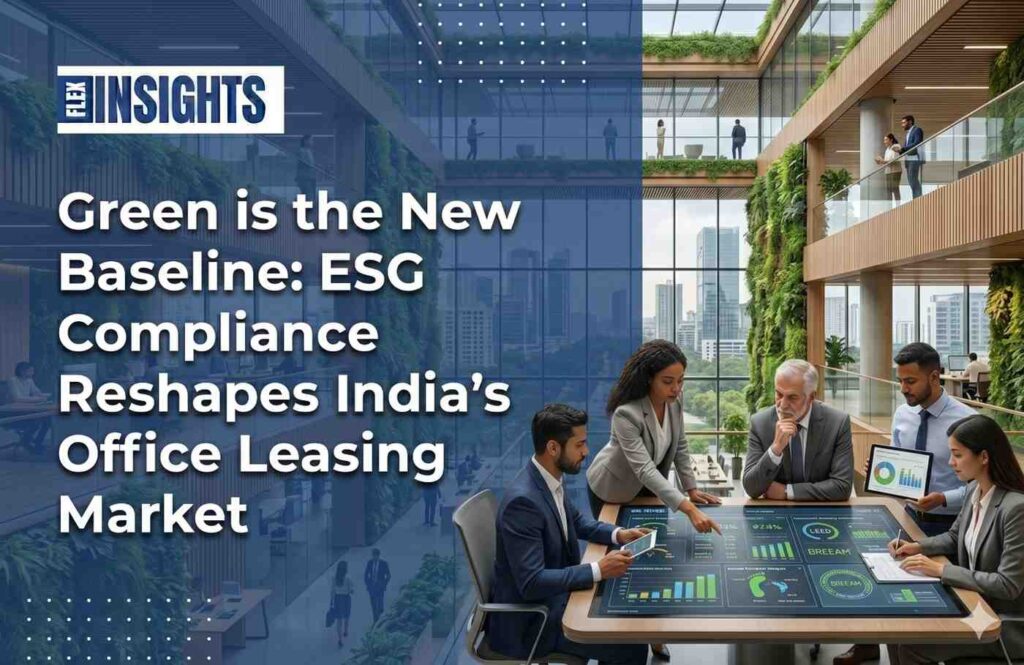
India’s real estate sector is rapidly shifting toward sustainability, with 80–85% of office leasing now in green-certified buildings. Driven by ESG mandates, occupier demand, and investor confidence, green assets are commanding rental premiums while redefining design, pricing, and long-term asset performance across commercial and residential markets.
India’s real estate sector is undergoing a structural shift, with sustainability no longer viewed as a branding exercise but as a business necessity. Across commercial real estate, occupiers—especially global firms and Global Capability Centres (GCCs)—are embedding ESG compliance into their leasing decisions. What was once optional is now influencing how assets are valued, leased, and financed.
Nearly 80–85% of new office leasing in India is now taking place in green-certified buildings. This marks a decisive change from just a few years ago, effectively making sustainability the market baseline. Energy efficiency, water management systems, and indoor air quality are no longer add-ons; they are critical components evaluated early in leasing cycles.
Premium Assets, Stronger Demand
The demand shift is translating into tangible financial gains. Green-certified Grade-A office assets are commanding rental premiums of up to 24% in Mumbai, 13% in Delhi-NCR, and 9% in Bengaluru. These assets are also witnessing faster leasing velocity and stronger institutional interest, particularly from investors aligning portfolios with ESG mandates.
“Sustainability in real estate is no longer an option – it is becoming a core driver of how the sector evolves,” says Shekhar G Patel, President, CREDAI. He adds that the industry is increasingly integrating sustainability into planning, focusing on long-term efficiency, lifecycle value, and resource optimisation.
Design Innovation Meets Cost Pressures
While commercial real estate is leading the charge, residential developers face a more complex challenge—balancing sustainability with affordability. Rising construction costs are pushing developers to rethink design strategies rather than rely on expensive technologies.
Simple yet effective measures such as climate-responsive architecture, better building orientation, rainwater harvesting, and the use of local materials are gaining traction. These approaches not only reduce environmental impact but also lower operational costs over time.
Changing Buyer and Occupier Mindsets
End-users are also driving this transition. Today’s occupiers and homebuyers are far more aware of maintenance costs and environmental quality. Features like natural lighting, efficient water systems, and improved air circulation are increasingly influencing decision-making.
“We view sustainability through the lens of practical liveability,” says Sandeep Chhillar, Founder & Chairman, Landmark Group, noting that the focus is shifting from certifications to long-term usability and efficiency.
A Long-Term Growth Driver
The broader impact of this shift is significant. India’s real estate sector, which currently contributes 6–8% to GDP, is projected to reach USD 5–10 trillion by 2047. Sustainability is emerging as a key pillar of this growth, enhancing asset resilience and investor confidence.
Developers are also recognising the performance advantage of green buildings. Lower operating costs, higher tenant retention, and stronger capital inflows are making sustainable assets more attractive than ever.
The Road Ahead: From Premium to Standard
Looking ahead, the industry may soon reach a point where green buildings are no longer considered premium. As urban challenges such as water scarcity, infrastructure strain, and rising temperatures intensify, sustainable development could become the only viable path forward.
“The architecture has to be climate-responsive from day one,” says Mitul Jain, Managing Director, SPJ Group, highlighting the growing importance of integrating sustainability into the core design process.
In many ways, the transition is already underway. The real question now is not whether sustainability will define the future of real estate, but how quickly the industry can scale it.