
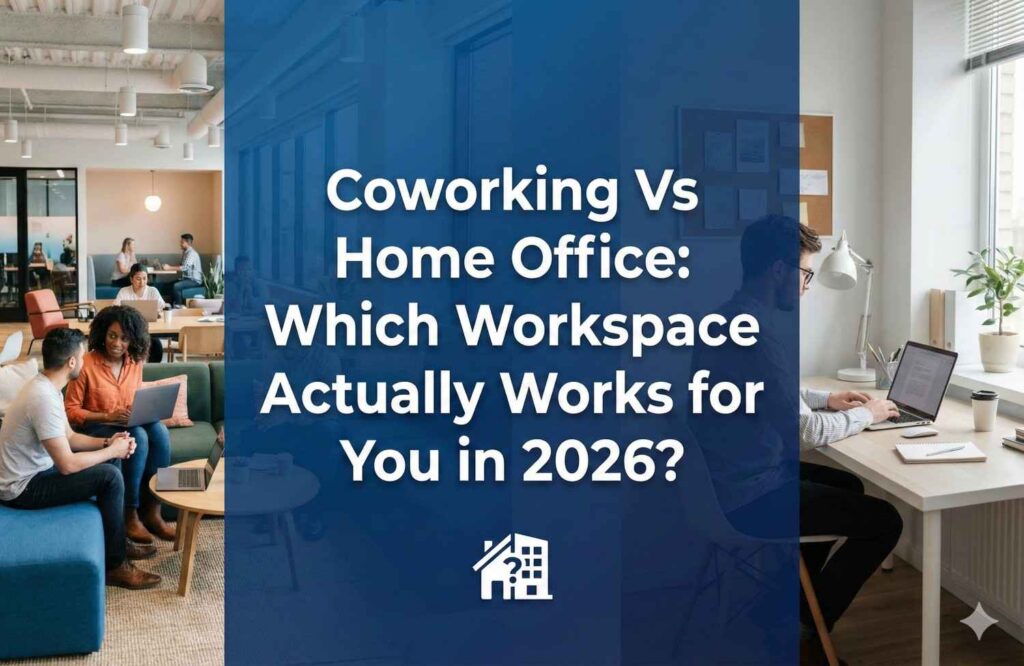
This article helps you decide whether a coworking space or a home office suits you best in 2026, comparing productivity, focus, cost, networking, flexibility, and boundaries. It explains the benefits, drawbacks, and real-world use cases so that different professionals can confidently choose—or blend—the right workspace setup.
The traditional workplace has evolved dramatically. Just a few years ago, work meant commuting to office desks and adhering to strict schedules. Today, professionals have diverse workspace options—living rooms, dedicated coworking spaces, or hybrid combinations. Remote work has fundamentally reshaped how people think about productivity, flexibility, and work-life balance.
The key question for modern professionals: which workspace delivers better results — working from home or choosing a coworking space?
Both options promise freedom, yet they feel completely different once you actually start working. In this article, we’ll break down everything you need to know, from benefits and challenges to practical differences and who each option is best for.
Why Remote & Hybrid Work Completely Reshaped Modern Workspaces
Remote and hybrid work models surged after the pandemic and have not gone away. Professionals realised they could stay productive without being tied to a traditional office. Many also reported better work-life balance and improved well-being when flexible work became available.
But with flexibility came new challenges:
- Isolation and loneliness from working alone
- Distractions and blurred work-life boundaries
- Lack of proper workspace setups at home
This is exactly why coworking spaces have been booming: they combine the freedom of remote work with the structure of an office environment.
Coworking Spaces Explained
Coworking spaces are professional shared offices designed for freelancers, startups, remote employees, and small teams. Instead of signing long leases, you pay for flexible memberships on a daily, weekly, or monthly basis.
What Makes Coworking Spaces Attractive?
- Professional environment: High-speed internet, meeting rooms, office amenities
- Networking opportunities: Collaboration with other professionals
- Productivity boost: 74% of coworking members say they feel more productive in these environments
- Clear work-life boundaries: You leave home to work, reducing burnout
- Creative energy: Exposure to different industries sparks new ideas
Downsides You Should Know
- Noise and distractions from open environments
- Limited privacy for confidential work
- Monthly membership costs
- Limited control over your workspace setup
In short, coworking works best when you need structure and community but not a full corporate office culture. But if you’re outgrowing shared spaces or struggle with noise, privacy, or control, a managed office or private office within a coworking space offers a quieter, fully customisable, enterprise-grade environment without losing flexibility.
Home Offices Explained: The Ultimate Flexibility
Working from home sounds like a dream: no commute, flexible hours, and full control over your environment. For many professionals, it is the perfect setup.
Why People Love Working From Home
- Zero commute saves time and money
- Full control over your workspace
- Personalised comfort and flexibility
- Better focus for deep, independent work
But It’s Not Always Perfect
- Isolation and lack of social interaction
- Household distractions reduce productivity
- Difficulty separating work and personal life
- Limited access to professional equipment or resources
A home office works great if you’re disciplined, but it can feel lonely or chaotic depending on your lifestyle.
Coworking vs Home Office: The Real Differences That Impact Daily Productivity
Environment and Work Atmosphere
Coworking spaces create a professional mindset the moment you walk in. People around you are working seriously, which naturally builds focus and accountability. The structured environment, ergonomic setup, and office-like atmosphere help maintain routines.
A home office, while offering comfort and flexibility, can blur boundaries, making it harder to mentally separate work from personal life.
Productivity and Focus Levels
In coworking spaces, productivity often improves because the environment fosters discipline without the strict corporate pressure of a traditional office. Seeing others work seriously pushes you to stay on track, and dedicated quiet zones help reduce distractions.
At home, productivity varies widely; some work better in solitude, while others struggle with comfort, household interruptions, or procrastination without clear structure.
Social Interaction and Networking Opportunities
Coworking spaces offer organic networking through casual conversations, shared events, and daily interactions with professionals from diverse industries. This exposure can spark collaborations, partnerships, or new business opportunities.
Working from home limits social interaction to online meetings, which may feel efficient but often lacks the human connection and spontaneous creativity that in-person interactions naturally create.
Costs and Financial Considerations
Home offices usually cost less over the long term because there are no monthly fees once your setup is ready. You save on commuting, meals, and workspace fees.
Coworking spaces require ongoing payments but offer professional infrastructure, meeting rooms, high-speed internet, office equipment, and networking events, which can justify the cost for professionals seeking a polished business environment.
Distractions and Daily Interruptions
Coworking spaces often have background noise and occasional conversations, which can energise or distract, depending on your work style. Many spaces offer quiet zones to manage this.
Home offices introduce different distractions, such as family members, chores, or social media, and without a structured routine, it is easy to lose focus or unintentionally extend work hours.
Work-Life Balance and Mental Separation
Using a coworking space helps create a clear mental boundary between work and personal life. Leaving home for work encourages routines and makes it easier to disconnect at the end of the day.
Working from home offers flexibility but often blurs boundaries, leading many professionals to work longer hours or struggle to truly switch off.
Privacy and Control Over Your Workspace
Home offices provide complete privacy and full control over your environment. You can handle confidential calls, sensitive information, and focused tasks without interruptions.
Coworking spaces are inherently shared, which can limit privacy in open areas. While private booths and rooms are available, maintaining confidentiality or deep concentration may require additional planning or a higher-tier membership.
Coworking vs Home Office: Key Differences at a Glance
| Factor | Coworking Space | Home Office |
| Environment | Professional & collaborative | Personal & flexible |
| Productivity | High due to structure | Depends on discipline |
| Social Interaction | Strong networking opportunities | Minimal social contact |
| Cost | Flexible memberships (Daily, Weekly, or Monthly) | Mostly free after setup |
| Distractions | Office noise | Household interruptions |
| Work-Life Balance | Clear boundaries | Often blurred |
| Privacy | Limited in shared areas | Full control |
Industry Growth Insight: Coworking Spaces Vs Home Offices
Flexible work is a structural shift that is reshaping how and where people work. The global coworking market was valued at about $27.6 billion in 2025 and is projected to exceed $36 billion by 2030, showing strong demand for shared workspaces.
At the same time, the home office setup market is expected to reach nearly $105 billion by 2033, underscoring the growing investment in both remote and hybrid work environments.
Who Should Choose Coworking Spaces?
Coworking is ideal if you:
- Feel unmotivated or distracted at home
- Want to network and meet other professionals
- Need meeting rooms or office infrastructure
- Thrive in social, energetic environments
- Run a startup or work with clients regularly
If you crave structure without corporate rigidity, coworking could be a game-changer.
Who Should Choose a Home Office?
Working from home might be perfect if you:
- Prefer quiet, focused environments
- Have a well-designed workspace at home
- Work independently without frequent meetings
- Value flexibility and zero commuting
- Have strong self-discipline and routines
If you’re comfortable working solo and managing your own schedule, a home office can be incredibly productive, but working from a coworking space at least a few days a week helps you stay connected, motivated, and in a more professional environment.
Finding the Right Balance: Why Hybrid Might Be the Future
The biggest truth that most professionals discover eventually is that you don’t have to pick just one.
Hybrid work is becoming the new normal because it combines the best of both worlds:
- Focused work at home
- Collaboration and networking at coworking spaces
- Reduced burnout and improved well-being
Many workers today use coworking spaces a few days a week and work from home on others. Hence, this helps create a flexible system that suits their lifestyle.
Final Take
So, in a nutshell, there’s no universal winner in the coworking and home office debate. The right choice depends on your personality, work type, lifestyle, and productivity style.
If you need energy, networking, and professional structure, coworking could transform your workday. But if you value independence, flexibility, and comfort, a home office might be your perfect setup. And if you want the best of both worlds, hybrid work is probably the smartest path forward.
At the end of the day, the goal is to work in a way that helps you stay productive, balanced, and genuinely happy with your routine.