
A new Interio by Godrej study of 350 Indian employees reveals 89% want offices to feel as warm and comfortable as home. The whitepaper maps hybrid work patterns, defines three essential space types, and urges companies to redesign noisy, outdated offices into adaptive, wellness-focused, tech-enabled ecosystems for collaboration and community.
Interio by Godrej, the furniture brand from the Godrej Enterprises Group, has released a new whitepaper, “Social Office Reimagined: Reality of Hybrid Workspaces,” on how hybrid work is reshaping offices. Based on a nation-wide study of 350 employees across 50+ offices, the report maps how Indians actually work today—and what they expect from the office.
The findings show a workforce split across models: 42.1% work exclusively from offices, 10.5% work exclusively from home, and 47.4% work a mix of office and home. Yet when it comes to collaboration, mentoring and networking, both new joiners (77%) and veterans (75%) still prefer being in the office with their teams. Physical space, the study suggests, hasn’t lost relevance; it has lost alignment.
“Offices Must Do More Than Just Host People”
Commenting on the research, Sameer Joshi, Senior Vice President and Head of B2B Business, Interio by Godrej, is clear that hybrid is here to stay. “Hybrid work is no longer just a trend; it is the new reality,” he says. “Our research shows that employees want offices to be more than just workspaces. They need environments that support focused work, enable collaboration and build community.”
To deliver that, Joshi argues for “designing adaptive workspaces with quiet zones for concentration, interactive areas for teamwork and social spaces for connection.” Interio’s view of the office is not a static floor plate, but “an adaptive ecosystem that integrates seamlessly with technology to encourage collaboration and productivity.” The company is already seeing strong demand for such human-centred solutions and is “looking to grow this segment by 25% in FY26.”
Three Space Types Shaping the Social Office 2.0
The whitepaper introduces the idea of a “Social Office 2.0,” built around three critical space types. Immersive Spaces support focused, individual work; 57.9% of respondents prefer dedicated workstations for deep, distraction-free productivity. Interactive Spaces enable collaboration, with the same proportion favouring them for mentoring and learning activities.
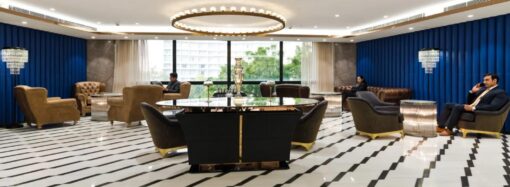
Then there are Social Courtyards—zones for informal interaction, culture and community. A striking 84.2% of employees say these social spaces are vital for networking, relationship-building and staying connected to organisational culture. In fact, 89.5% want their offices to reflect “the warmth and comfort of their homes,” pushing companies to move beyond cold, corporate aesthetics.
A Design Gap in the Era of Hybrid
Despite this clear shift in expectations, most workplaces have barely changed since the pandemic. Only 29.4% of offices surveyed have made significant design changes in the last three years. At the same time, 73.7% of employees say noise-related distractions regularly affect their ability to focus.
This mismatch highlights a risk: organisations have upgraded their policies to hybrid, but not their physical infrastructure. The study warns that unless offices evolve into adaptive, acoustically balanced, wellness-focused ecosystems, they will fail to support how people actually work today.
From Traditional Offices to Adaptive Ecosystems
Interio by Godrej’s research is both a diagnosis and a blueprint. It frames the modern office as a hub that must balance productivity, collaboration and wellbeing. For leaders rethinking their real estate strategy, the message is clear: the question is no longer whether to keep the office, but how to redesign it so people genuinely want to be there.