India’s flexible workspace sector reached a turning point in 2025, as enterprises and GCCs increasingly adopted managed offices as part of their long-term real estate strategies. With flex accounting for nearly 20% of office leasing, operators like COWRKS are expanding enterprise solutions to meet rising demand for scalable, high-quality workplace environments.
India’s flexible workspace sector has entered a new phase of maturity. What began as an experimental workplace model for startups and freelancers is now becoming a core real estate strategy for large corporations and Global Capability Centres (GCCs).
Industry leaders say 2025 marked a defining shift in how enterprises view managed workspaces. Instead of treating them as temporary or stop-gap solutions, companies are now integrating flexible offices into their long-term workplace strategies.
Parul Thakur, Senior Vice President and Business Head at COWRKS, described the transformation clearly.
“If 2020 was about disruption and 2022 about experimentation, then 2025 has been the year managed workspaces truly came of age, evolving into an enterprise-grade, future-ready real estate solution rather than a short-term alternative.”
This shift reflects how businesses now prioritise agility, scalability, and operational efficiency in their office strategies.
Data Reflects Strong Industry Momentum
Industry data supports the growing adoption of flexible workspaces across India. According to JLL’s market insights, flexible and managed offices now account for nearly one-fifth of the country’s total office leasing activity.
In 2025 alone, indigenous flexible workspace operators leased approximately 18 million square feet, highlighting the sector’s rapid expansion. Flex offices also emerged as the leading leasing segment for two consecutive quarters, with their share in fourth-quarter leasing reaching a historic 26.6 per cent.
This growth is largely being driven by large enterprises and GCCs seeking scalable workplace solutions that can adapt quickly to business expansion.
Enterprise Expectations Are Changing
One of the biggest developments in 2025 was the shift in enterprise expectations from flexible offices. Companies are no longer looking only for short-term leases or plug-and-play desks. Instead, they are demanding institutional-grade infrastructure, global workplace standards, and reliable delivery timelines.
Thakur noted that this evolving demand has significantly shaped the company’s growth strategy.
“What stood out in 2025 was a clear shift in expectations. Enterprises were no longer asking only for flexibility; they wanted institutional-grade execution, delivery certainty, scalability, and a globally consistent workplace experience. That shift has strongly shaped COWRKS’ growth trajectory.”
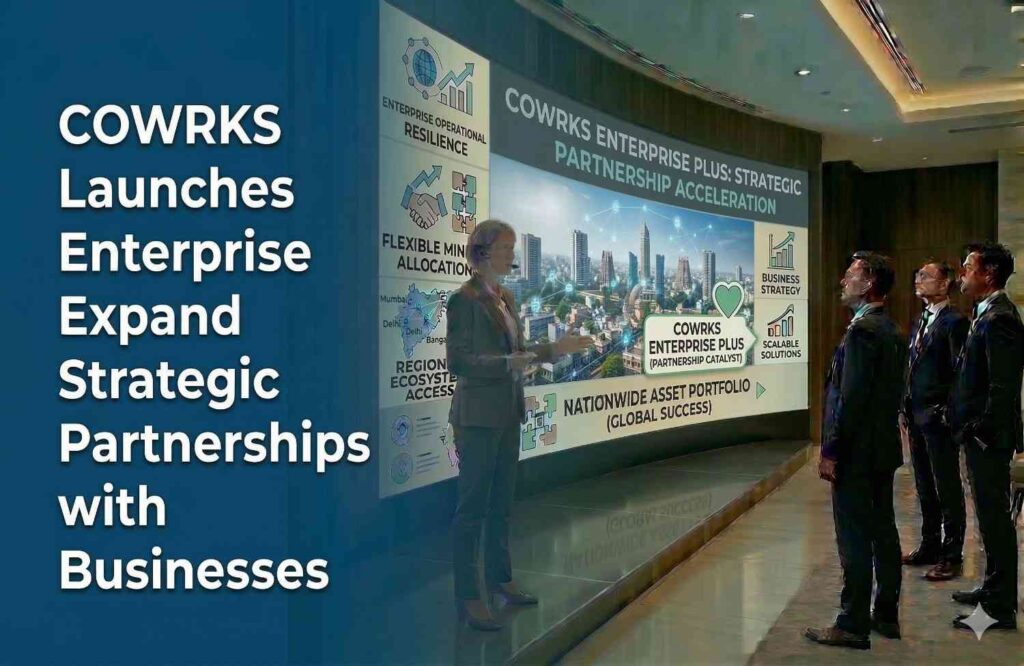
To address these needs, COWRKS expanded its managed workspace portfolio by more than one million square feet through its enterprise-focused offering, Enterprise Plus.
Hybrid Work Evolves Into Experience-Led Offices
The evolution of flexible workspaces is also closely linked to the changing nature of hybrid work. Early predictions suggested hybrid work might decline over time, but the reality has been different.
Instead of fading away, hybrid work has matured into a more structured and intentional model. Offices are no longer designed purely around attendance but are increasingly being developed as hubs for collaboration, learning, and innovation.
Thakur explained how workplace design priorities are shifting.
“At COWRKS, we have always believed that enterprise clients need more than desks and leases. They need an ecosystem that can evolve alongside their business.”
This new approach is driving demand for collaborative zones, shared amenities, wellness-oriented design, and technology-enabled office environments that enhance the overall employee experience.
Enterprise Ecosystems Replace Traditional Offices
Modern managed workspaces are now being designed as complete workplace ecosystems rather than simple office facilities. Integrated amenities such as cafés, social spaces, intuitive technology, and support services are becoming standard components of premium flexible offices.
These environments help enterprises deliver a high-quality workplace experience without the financial burden of owning and managing office assets.
According to Thakur, this ecosystem approach is increasingly attracting large enterprises.
“Through Enterprise Plus, COWRKS has evolved from being a workspace provider to becoming a long-term strategic and ecosystem partner enabling enterprise growth at scale.”
Strong Growth Expected as GCC Ecosystem Expands
Looking ahead, industry experts believe demand for managed workspaces will remain strong as India’s GCC ecosystem continues to grow rapidly.
Thakur highlighted that the GCC sector alone is expected to expand significantly over the next few years.
“As we move into 2026, the opportunity for managed workspaces is clearer than ever. India’s GCC ecosystem alone is expected to grow by over 20 per cent in the next two years.”
With this growth, enterprises will increasingly prioritise speed, scalability, and global workplace standards, areas where managed workspaces offer clear advantages.
Today, COWRKS operates 43 centres across eight cities, managing more than 1.8 million square feet of workspace and over 24,700 desks. The company’s strategy reflects a broader industry shift where flexible office providers are evolving from simple workspace operators into long-term partners supporting enterprise growth.