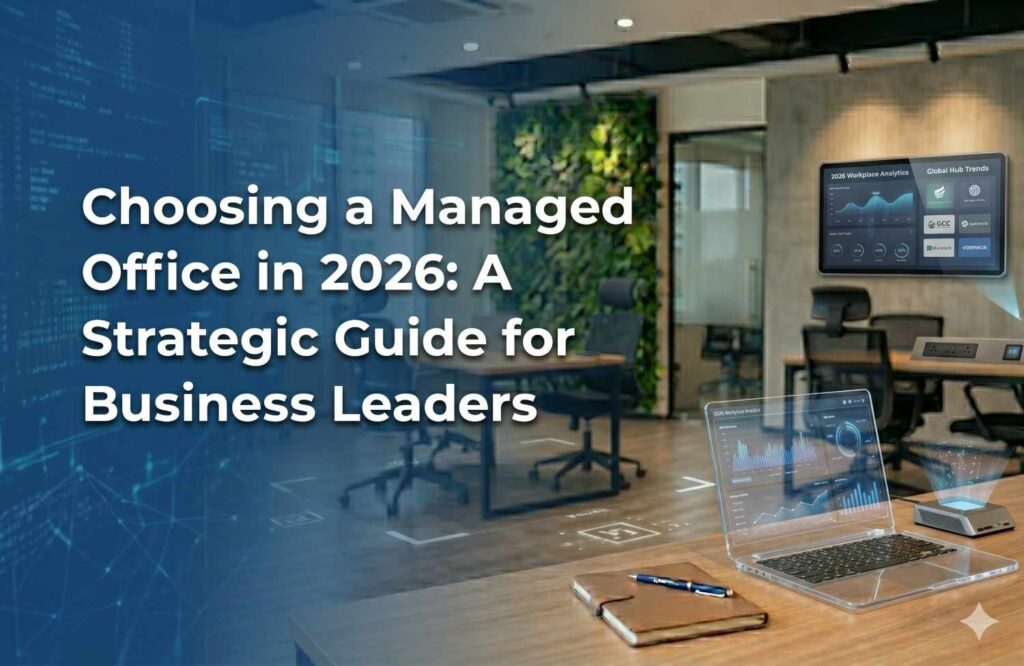
This guide explains why managed offices have evolved into a strategic business decision in 2026. It highlights how flexibility, location, customization, technology, and employee experience now play a critical role in driving growth, reducing risk, and improving operational efficiency. It also outlines how modern providers deliver enterprise-grade infrastructure and financial transparency, making managed workspaces a smarter alternative to traditional leases.
A decade ago, setting up an office followed a predictable formula: secure a long-term lease, invest heavily in interiors, and commit to years of fixed overhead. Stability and predictability justified the capital spent.
But in 2026, that model no longer aligns with how modern businesses operate.
The modern business environment is motivated by fast changes in the market, shifting employee demands and the growth patterns that may accelerate or shift direction in a span of a quarter. Keeping capital tied up in rigid leases can slow innovation and limit strategic agility.
Leadership today is no longer about ownership, but about how quickly a company can open new divisions, expand teams, enter new markets, and adapt its design.
This development has transformed managed offices into a strategic operating model as opposed to a short-term alternative.
A managed office is not merely a furnished room and a place to share. It is a seamless business space – complete working, professionally managed and designed in a way that leadership teams can concentrate on performance as opposed to property management. Whenever it is chosen wisely, it turns into a continuation of the operating strategy of the company.
Not every managed workspace provider offers the same value. However, not all managed workspace providers deliver the same value. Selecting the right partner requires evaluating multiple critical factors.
Location Strategy: The Power of Strategic Address
The address of a company remains a factor of perception both within and without. Credibility is rated by clients. Seriousness is evaluated by investors. Talent takes into consideration the commute time and workplace.
Premium operators of workstations are people who buy goods in well-established commerce zones and not secondary or isolated areas. The position of a company within an industry ecosystem is provided by being located close to financial centers, technology clusters, or transportation corridors with high connectivity.
Leadership should ask?
- Will this resolve brand perception?
- Is it readily available to both clients and employees?
- Does it get us in the field with other organizations of peers and prospects?
Brand positioning is increased by the right place. The inappropriate one can put it in the background. An office that is run should not just create a presence in the market; it must strengthen market positions.
Enterprise Customization: Maintaining Organizational Identity
Among other issues, one of the most typical fears in switching a managed workspace is the possible watering down of brand image. First generation models of coworking tended to apply generalized aesthetic that placed the operator brand ahead of the tenant brand.
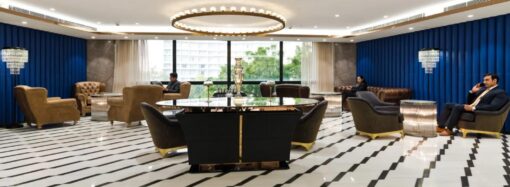
The market has matured. The major vendors are now offering customization at enterprise level; they have been developed to offer specific workflow, security and cultural suites. This consists of tailor-made layouts, customized reception space, secure entry areas, executive cabins, and specialty meeting spaces.
The point is easy, your office is supposed to feel and appear like your headquarters and not just a lent environment.
Good customization deals with:
- Operational efficiency of departments.
- Leadership areas that are confidential.
- Boardroom technology integration.
- Visual branding was in line with the company identity.
The most robust managed office relationships are that of partners in workplace design, not landlords who lease square feet.
Technology infrastructure: Continuity of operations at its heart
Although building design can be the first consideration, infrastructure is what defines the consistency of operations. In a world that is hybrid and globally connected, downtimes have direct effects. Lost customer calls, poor network connection during virtual presentation or security breach can directly affect the revenue and reputation.
Strong managed offices offer enterprise level systems which include:
- Redundant high-speed internet
- Dedicated server or IT rooms
- High-tech firewall security.
- Access control systems (Secure access control systems).
- On site technical support teams.
- Combined video conferencing products.
Infrastructure should also be considered by the leadership as a business continuity strategy when appraising providers. Operational resilience makes the workspace operator an unspoken partner.
An attractive office is worth having. It is necessary to have a technologically reliable one.
Employee Experience: Remote Comfort Competition
The transition to an informal work arrangement has altered the work expectations forever. The employees do not travel just to have a desk to sit, they want meaning, teamwork and a place that can help them do more.
The modern managed offices have to develop differentiated experiences, which will warrant physical presence.
The environments that work best are:
- Silent zones of profound attention.
- Team interaction areas.
- Breakout areas that are cafe style.
- Wellness or recharge rooms
- Considerable acoustics and ergonomic furniture.
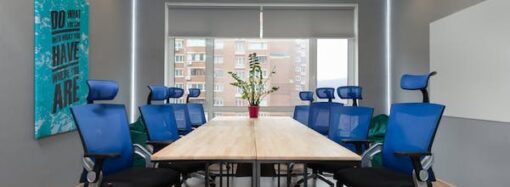
- Natural lighting and biophilic design.
The workplace designedly has become an issue of retention, engagement, and morale. An office that is poorly designed can demotivate attendance, the well-designed office can revive culture. The enlightened leaders also understand that work place is not a cost center anymore, but a strategic instrument of performance of the workforce.
Flexibility & Scale: Creating a Design to Survive Uncertainty
Conventional leases are those that predict consistent growth and accountable headcount. Not many companies today work with such confidence.
Organizations can grow fast post-financings, merge teams in the process of restructuring or penetrate new markets in a few months. These movements can be impeded by a strict real estate commitment.
Managed offices overcome this difficulty by providing:
- Reduced termination of contracts.
- The same building has expansion opportunities.
- Flexibility in relocations among various locations.
- Capability to both scale up and down with minimal penalty.
This elasticity reflects the real estate as an unalterable commitment to an adaptive working material.
The fact is that flexibility decreases both the financial and operational risk in the long run.
Financial Transparency: Capital expense to Operating expense conversion.
Conventional office arrangements tend to hide indirect costs:
- Interior fit-outs
- Furniture procurement
- Maintenance contracts
- Utility bills
- Security services
- Administrative staff
- Ongoing repairs
These costs are piled up in unanticipated costs and budget strains and divert resources towards expansion efforts.
The managed offices blend these factors into one predictable operating cost. This model maintains the cash flow, financial forecasting is easy, and the unexpected expenditure is minimized.
In the case of expanding organizations, they can use this predictability to release capital to hire, expand their marketing efforts, develop products, or make strategic acquisitions. Financial transparency not only becomes convenient but it also turns out to be competitive.
Industry Change: Increasing Standards
The managed workspace business has been mature. The operations providers like iSprout, WeWork, TableSpace and Smartworks have gone even further with premium locations, enterprise customization and powerful infrastructure built into flexible frameworks.
Their development is indicative of a wider change: being flexible no longer means being compromising. It can co-exist with professionalism, brand integrity and operational strength.
Summary: The Office as a Growth Enabler
It is not just a mere real estate deal to choose office space in the year 2026. It is a strategic management choice that creates an impact on brand image, employee participation, financial position, and organizational flexibility.
The optimal managed workspace partner provides:
- Credibility by location.
- Identity through personalization.
- Technological reliability.
- Experience as a measure of productivity.
- Scalability to agility.
- Transparent costing stability.