
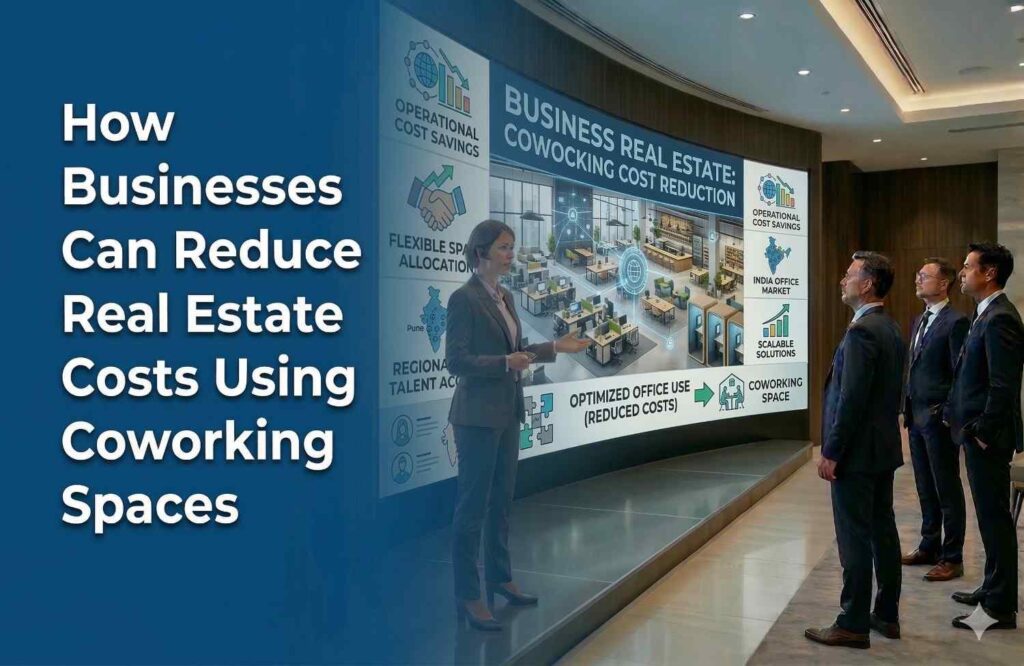
Businesses can significantly reduce real estate costs by shifting from traditional office leases to flexible coworking spaces. Coworking lowers lease expenses, eliminates upfront infrastructure investments, bundles utilities and maintenance into one predictable fee, and optimises space usage. It also provides prime locations, scalability, operational efficiency, and networking benefits, supporting agile, cost-effective growth.
Can you guess what one of the biggest silent expenses in most businesses is? No, it’s not marketing, it’s not salaries, it’s real estate.
Office rent, security deposits, electricity, maintenance, internet, furniture, cleaning staff, the list keeps growing. And once you sign a traditional lease, you’re locked in. Every month, the cost stays the same, whether the office is full or half empty.
For startups, that pressure feels intense; for growing companies, it slows expansion, and for large enterprises, it drains capital that could be invested elsewhere.
But now the shift is happening worldwide: businesses are rethinking how they use space. And coworking spaces are becoming a serious financial strategy instead of just a trend.
Let’s break down exactly how coworking helps reduce real estate costs in a practical, real-world way.
The New Real Estate Reality for Modern Businesses
In today’s business landscape, agility is a survival trait. Companies need environments that match their pace. Yet traditional office setups impose long-term lease obligations, significant upfront investments, and ongoing operational complexity.
By contrast, coworking spaces offer a dynamic alternative where cost savings and flexibility work hand in hand.
Let’s break down how this shift works and why it’s resonating across industries.
1. Lower Lease Costs Without Compromise
One of the most compelling benefits of coworking spaces is the freedom from long-term lease burdens.
In traditional office arrangements, businesses often commit to leases that span 3-10 years, locking in rent and hefty security deposits. Coworking setups, by contrast, let you pay only for the space you truly need, whether that’s a hot desk, dedicated desk, private office, or meeting room, without tying you down to long contracts.
This approach presents significant financial advantages:
- Businesses can reduce direct leasing expenses by 15-40 per cent compared with conventional office leases.
- Companies avoid complex lease negotiations and the legal fees associated with commercial rentals.
- With flexible plans, you pay month by month and adjust as your team grows or restructures.
2. Shared Infrastructure Means Fewer Bills to Pay
If you visit any well-run coworking space, then you’ll see ready-to-use workstations, high-speed Wi-Fi, conference rooms, printers, and even kitchen and break areas.
Here’s why that matters for your bottom line:
- You don’t spend on furniture, networking infrastructure, or office appliances.
- Utilities such as internet, power, water, and climate control are included in a bundled fee.
- Regular maintenance and cleaning aren’t on your payroll.
For many small businesses and startups, this lightens both capital expenditure and ongoing operational costs.
If we put it simply, it means you pay one predictable rate instead of managing a long list of bills and vendors, and your team gets what they need.
3. Optimised Real Estate Footprint Saves Space & Money
Traditional offices ask businesses to guess how much space they’ll need, and often overestimate. This leads to paying for unused square footage, sometimes as high as 150–250 sq. ft per person.
Coworking spaces flip that model:
- Most coworking plans allocate 60–100 sq. ft per person, effectively lowering per-employee real estate costs.
- If your team grows or shrinks, you can scale your space quickly without penalties.
This kind of right-sized footprint reduces waste and eliminates the risk of paying rent for empty desks. It’s especially impactful for businesses experiencing fluctuating workforce sizes or project-based staffing changes.
4. Access to Prime Locations Without Premium Prices
A traditional office lease in a central business district can be prohibitively expensive. Coworking spaces make high-value commercial addresses accessible to more businesses for a fraction of the cost.
This means:
- Your company can operate in business hubs that were previously beyond reach.
- Employees benefit from easier commutes and professional environments.
- Your brand gets instant credibility with a business address that inspires confidence.
This access combines cost efficiency with strategic presence, which is a rare and powerful combination.
5. Predictable Budgeting and Simplified Financial Planning
If your business budget feels like a moving target, coworking offers clarity. Instead of juggling rent, electricity, internet, cleaning, property tax, and maintenance, you deal with one fixed or tiered membership cost.
That simplicity translates into:
- Better cash flow projections
- Easier quarterly and annual financial forecasts
- Elimination of unexpected cost spikes
For CFOs and business owners alike, that kind of predictability is incredibly empowering.
6. Outsourced Facility Management Saves Time and Resources
Running a traditional office requires people to manage it. It’s never just about paying rent. Someone has to handle maintenance, coordinate cleaning, manage security, deal with internet providers, fix technical issues, and respond when something breaks.
Coworking spaces relieve you of legions of operational tasks:
- No facility managers, cleaners, or security staff on your payroll.
- No vendor relationships to navigate.
- No scheduling repairs or handling IT logistics.
Apart from saving you money, it also frees your team to focus on innovation, service delivery, and growth.
7. Collaboration and Networking: The Indirect Cost Advantages
Beyond the direct cost savings, coworking spaces foster community. You share physical space with professionals from diverse industries, creating opportunities for collaboration, partnerships, and referrals at no extra cost.
This community dynamic can lead to:
- Shared projects or pooled resources
- Business introductions without marketing costs
- Access to potential clients and collaborators
In many cases, the value from these organic business relationships far outweighs the savings on the lease alone.
8. A Real Estate Strategy That Scales With You
Perhaps one of the most strategic benefits of coworking spaces is their ability to adapt to change. In today’s rapidly evolving markets, businesses must be prepared to pivot, whether that’s hiring fast, restructuring teams, or shifting operations.
With coworking:
- You can downsize without penalties.
- You can expand without relocating.
- You can trial new markets before committing to full leases.
This adaptability gives businesses a real estate strategy built for growth, not stagnation.
Future Outlook & Why Coworking Is the Real Deal
If you look ahead, coworking is poised to be one of the most significant shifts in how businesses think about office space. The global coworking market is expanding fast. According to multiple industry forecasts, the market could grow from around $25–27 billion in 2025 to well over $40 billion by 2030, and even approach $90 billion by 2035 as flexible work models become mainstream.
This growth isn’t happening by accident. More companies are embracing hybrid work, scaling teams flexibly, and reducing long-term lease commitments. Flexible and coworking spaces now account for an increasing share of real estate portfolios as firms seek agility, lower fixed costs, and better alignment with today’s workplace expectations.
In practice, this means organisations that adopt coworking early will stay nimble, responsive, and future-ready as the world of work continues to change.