India’s office market is in expansion mode, with NCR, Pune, Bengaluru, Chennai, Mumbai and Hyderabad all seeing strong demand. New supply, rapid GCC growth, hybrid-friendly flex spaces and rising economic confidence are reshaping how and where companies work. This story breaks down the key cities, numbers and forces behind the current boom.
India’s commercial real estate is in the middle of an unexpected upswing. From Delhi-NCR and Pune to Bengaluru and Chennai, global companies and Indian corporates are driving a fresh wave of office demand. As India positions itself as a “global business engine”, office markets are responding with new supply, better quality stock and more flexible workplace formats. The boom is not limited to one metro; it is a multi-city story powered by infrastructure, talent and policy tailwinds.
NCR: Infrastructure, Airports and Grade A Momentum
Delhi-NCR has always been a favourite, but it has now moved decisively up the office rankings. Noida and Gurugram are at the Centre of a “35% rise in new office supply”, supported by expressways, metro expansion and the “soon-to-be-operational Noida International Airport.” Global manufacturing firms, IT companies and Indian conglomerates are setting up large campuses and Global Capability Centres (GCCs). Demand is skewed towards Grade A buildings with “top-class amenities, sustainable certifications, and tech-enabled facilities,” firmly positioning NCR on the global occupier map.
Pune and Chennai: Surprise Outperformers
If there were a title for “Most Improved City”, Pune would claim it. The city added 3.7 million sq ft of new supply in a single quarter — “a massive 164% jump” year-on-year, as per Vestian. Its strong tech base, rising GCC count and cost advantage over larger metros make it attractive for both startups and Fortune 500 captives. Chennai, meanwhile, has quietly built one of India’s most balanced office markets. New supply has surged “320% year-on-year,” supported by healthy leasing from IT, manufacturing, BFSI and GCCs. Metro expansions and industrial corridors are giving the city a long runway for stable, diversified growth.
Bengaluru, Mumbai and Hyderabad: The Established Heavyweights
Bengaluru remains the country’s largest office market, clocking “18.2 million sq ft in leasings in the first half of 2025” — its highest ever for that period, according to Knight Frank. Its Silicon Valley status continues to attract large tech occupiers and GCCs, which drove “65% of all GCC deals in Q3 2025.” Mumbai, India’s “business capital,” is constrained in South Mumbai, but with action shifting to suburbs and Navi Mumbai, where new supply has doubled to 1.8 million sq ft. These clusters offer modern office parks and more affordable rentals, attracting financial services, media, and startup tenants. Hyderabad, despite a dip in new completions, still recorded 7.5 million sq ft of absorption and remains a favourite for companies leveraging its large campuses and “world-class tech talent” in India’s first planned cyber city.
GCCs, Hybrid Work and Confidence: What’s Fueling the Boom
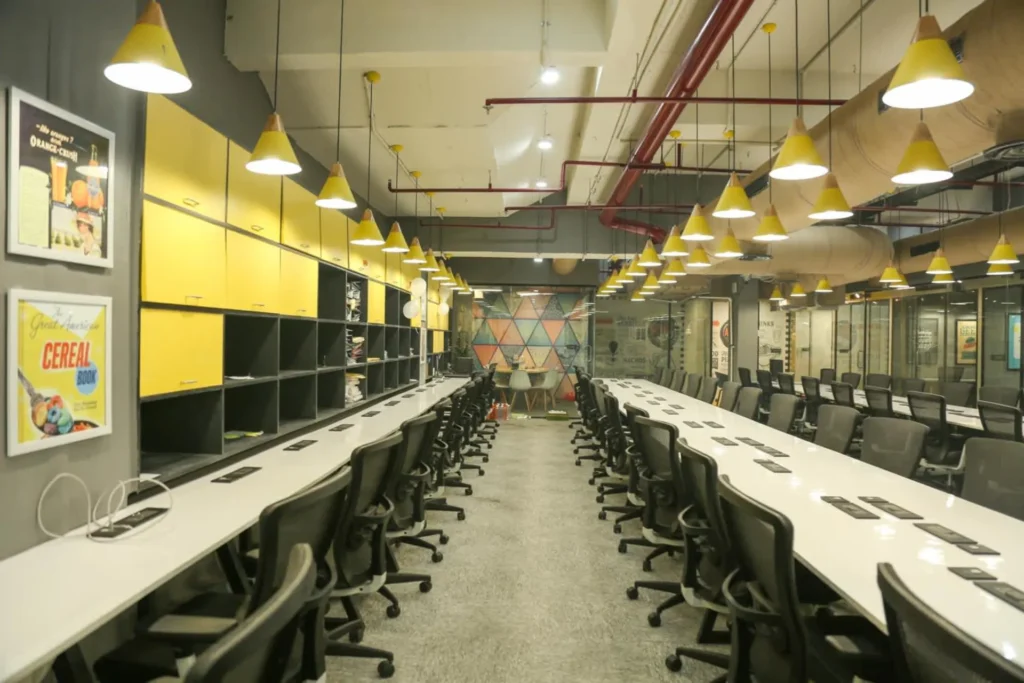
Behind the numbers is a clear demand story. GCCs are the “big movers”, now contributing “over 30% of India’s leasing activity” as multinationals deepen their India presence in response to rising talent costs abroad and visa uncertainties. Hybrid work is not killing demand; “Flexible work isn’t killing office demand — it’s reshaping it.” Companies are opting for coworking and flexible spaces that enable them to scale up or down with ease, making flexibility a core part of their portfolio strategy. At the same time, India’s steady growth, improving infrastructure, and strong domestic demand are giving developers the confidence to keep investing in new, high-quality assets.
Beyond Metros: The Next Frontier
While this cycle is led by metros, the story doesn’t end there. Tier II and III cities are beginning to see traction as talent disperses and smaller business hubs emerge. Coworking and managed office operators are helping bridge the urban–rural opportunity gap with ready-to-use, tech-enabled spaces. As India continues its economic rise, the demand for office space will be measured not just in square feet, but in how effectively these workplaces support growth, innovation and long-term institutional strength.