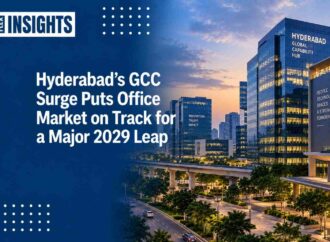

The southern states of India—Bengaluru, Hyderabad, and Chennai—are emerging as key hubs in the Indian office space market. With over 52% of the country’s office stock located here, the region is benefiting from strong investments by Global Capability Centres (GCCs). This growth is supported by a rich talent pool, government policies, and rising demand for Grade A and flexible office spaces, making South India a cornerstone for India’s commercial real estate expansion.
Southern States Dominate Office Space Supply
India’s commercial real estate now boasts over a billion square feet of office stock, with South India contributing more than half of this supply. Cities like Bengaluru, Hyderabad, and Chennai serve as critical nodes in this ecosystem, leveraging a well-established base of skilled talent and a longstanding presence of offshore development centres. The geographical proximity between these cities enables healthy competition and talent mobility, further strengthening the office market.
GCCs: Key Growth Drivers
Global Capability Centres form a substantial part of this growth story. GCCs accounted for approximately one-third of all office space transactions nationally, and this share is poised to rise to around 40% next year. Rishi Das, CEO of IndiQube, highlights that many GCCs, including Fortune 2000 companies and unicorns, are scaling up operations in the region. These centres prefer premium, Grade A office spaces, often seeking flexible, managed office solutions for teams under 2,000 seats.
Flex and Managed Spaces Gain Traction
The demand for flexible coworking and managed office spaces is increasing, especially among smaller GCCs, which require plug-and-play setups. IndiQube reports occupancy levels of around 85-86%, reflecting strong absorption of flex spaces fueled by GCC growth. This trend addresses a market gap where large tech parks primarily cater to bigger companies, leaving smaller players to seek flexible alternatives.
Policy and Infrastructure Bottlenecks
While the momentum is strong, tier 2 and tier 3 cities in the south face challenges such as a lack of Grade A infrastructure and limited government incentives. Industry leaders call for enhanced public-private partnerships and single-window clearance systems to boost real estate development and attract more GCC investments outside major metros.
The FlexInsights Take
The southern states are riding a wave of commercial real estate growth fueled by evolving GCC investments. The shift from traditional back-office roles to diversified, high-value functions has broadened India’s appeal for global companies. Flexible workspace providers like IndiQube stand at the forefront of this evolution, offering scalable solutions that align with the complex needs of GCCs. Going forward, targeted infrastructure development in emerging tier 2 cities and supportive policies will be vital to sustaining this growth trajectory while spreading benefits beyond major urban hubs.