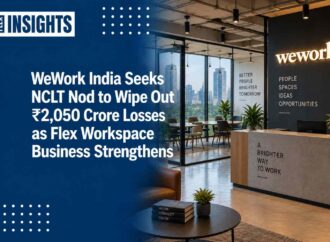

WeWork India has initiated investor outreach for its much-anticipated ₹4,000 crore ($407 million) IPO. Structured entirely as an offer-for-sale (OFS), the issue allows its parent company, Embassy Buildcon, to divest part of its stake. As India’s flexible workspace market surges, the IPO will serve as a litmus test for investor appetite in asset-light real estate models. However, the absence of fresh capital raises questions about future expansion versus shareholder liquidity.
IPO Format: Offer-for-Sale, No Fresh Capital
WeWork India’s IPO comprises only secondary share sales primarily by Embassy Buildcon, its largest shareholder. No proceeds will flow into the company itself. The IPO size remains pegged at approximately ₹4,000 crore ($407 million), and the valuation process has begun through non-deal roadshows.
Why Now: Sector Momentum and Investor Interest
The flexible workspace sector is witnessing record growth, spurred by hybrid work models. WeWork India, as one of the most recognized brands in this space, is capitalizing on rising demand and investor appetite especially after the success of Awfis and IndiQube’s public market moves.
Performance Metrics So Far
- FY24 revenue: Grew to ₹1,665 crore
- H1 FY25: Delivered ₹174 crore in profit
- EBITDA margins: Improved to 20.4%, reflecting operational efficiency
These numbers reflect a significant recovery post-COVID and strong enterprise client retention.
National Footprint and Client Base
WeWork India currently operates:
- 59 centers
- Across 8 major cities
- Over 94,000 desks
- 6.48 million sq. ft. under management
- Average occupancy: ~75%
- Key clients: AWS, Deutsche Telekom, Samsung, JP Morgan
Key Concern: No Expansion Capital
While performance is strong, the lack of fresh capital through this IPO could limit immediate scaling plans. Investors will be watching how the company manages organic growth with existing resources post-listing.
TheFlexInsights Takeaway
WeWork India’s IPO signals maturity in the co-working market, but also introduces strategic ambiguity. Without new capital, this listing is primarily a monetization event for current stakeholders. For investors, the focus will be on the company’s ability to sustain growth and maintain profitability in a competitive, fast-evolving space.