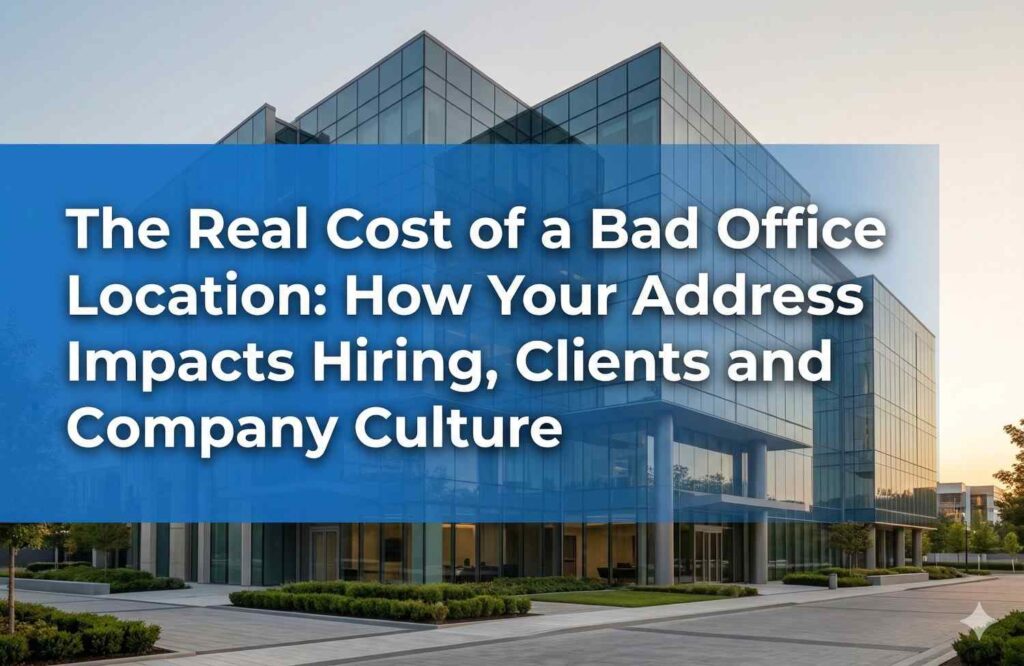
Cheap rent often hides the true cost of a bad office location. Beyond the bills, a poor address leads to high employee turnover and reduces daily productivity due to long commutes. It also weakens client trust and brand prestige. Choosing a well-connected, vibrant workspace is a strategic move for hiring and long-term growth.
Your office address is much more than a line on a business card. It acts as the pulse of your company. This affects how your team feels and how your clients see you. While a cheap rent price might look good on paper, a bad location often drains your profits in ways you cannot see.
Long commutes kill motivation and turn away great talent before they even apply. On the other side, a well-placed workspace builds trust and makes your brand feel solid. In this guide, we explore how your physical address shapes your company culture and hiring power. Discover why your location is a strategic asset that defines your path to growth.
The Hidden Financial Cost Beyond Rent
Many companies evaluate office space through a narrow financial lens. Rent becomes the central metric. However, rent represents only a portion of the true cost of a business location. This is why many growing teams now look at coworking spaces to balance premium addresses with manageable overheads.
Let’s look at the hidden costs that emerge when you choose the wrong location.
1. Higher Employee Turnover
A difficult commute can quickly reduce your employee satisfaction. Long travel times increase stress, lower productivity, and push talented professionals to seek opportunities closer to home.
Replacing employees carries a substantial cost. Recruitment, training, onboarding, and lost productivity during transition periods can easily exceed several months of salary.
2. Lost Productivity
If your employees spend 2 hours commuting daily and arrive at work mentally exhausted before their day even begins, this will gradually erode focus, energy, and collaboration. Location decisions, therefore, influence productivity more than you realise.
3. Operational Expenses
The true cost of your office also includes parking fees, building maintenance, transportation subsidies, and utility charges. Commercial real estate experts emphasise that rent is only one component of total occupancy cost.
4. Opportunity Cost
An inconvenient location can also limit your spontaneous business opportunities, such as networking events, industry meetups, and partnerships that often occur in commercial hubs. Often, being part of a vibrant coworking space puts you exactly where these conversations happen naturally. In other words, a cheaper office that you rent can quietly become a far more expensive business decision.
How Office Location Affects Your Ability to Hire Top Talent
Recruitment has become one of the most competitive challenges for modern businesses. Salary and job roles matter, yet location increasingly shapes whether top candidates even apply. The office address influences hiring in several key ways.
Commute and Work Life Balance
Candidates frequently evaluate commute time before accepting a role. So, if your office is located near public transport hubs or well-connected roads, then it will attract a wider talent pool. Because they reduce travel stress.
A poorly connected location immediately shrinks your hiring radius. Talented professionals simply choose companies closer to home.
Lifestyle and Surroundings
Modern employees value more than a desk and a paycheck. The environment around your office contributes to your daily work experience.
Locations near cafés, restaurants, gyms, parks, and social spaces create a more appealing workday. These amenities significantly improve employee satisfaction and retention.
For example, many technology companies cluster around areas like Hyderabad’s HITEC City and Gurgaon’s Cyber City, not only for proximity to industry but also for the lifestyle ecosystems that attract ambitious professionals.
First Impression for Candidates
Before candidates meet your team, they often search your office address online. A vibrant, accessible location signals an organised and ambitious company. A difficult-to-reach industrial building sends a very different message.
In competitive hiring markets, these small signals influence decisions more than companies expect.
Client Perception: Your Address as a Trust Signal
Clients form an impression about your company long before the first presentation begins. Often, that impression starts with your address. Location operates as a powerful psychological signal.
Credibility and Prestige
An office in a recognised commercial district automatically communicates professionalism and stability. Businesses located in well-known business hubs often appear more reliable and established to potential clients.
For example, many firms often select addresses such as Mumbai’s BKC or Delhi’s Connaught Place because the locations reinforce a premium brand perception.
The office address, therefore, functions as part of the company’s branding.
Accessibility and Convenience
Clients prefer working with businesses that respect their time. If you choose your office near airports, metro stations, or central roads, it will make arranging and attending meetings easier.
If reaching your office requires confusing directions, long traffic delays, or limited parking, client frustration begins before the meeting even starts.
First Impressions and Trust
A survey of 934 business decision makers revealed that 44.6 per cent consider having an office in the same city an important factor when evaluating a potential business partner.
Additionally, 60.4 per cent of respondents reported feeling more comfortable when their first meeting takes place in a company’s office.
These findings highlight an important truth. Even in a digital world, physical presence still signals legitimacy.
Your address acts as a silent credibility marker.
The Impact on Company Culture and Team Collaboration
Your company culture rarely depends on office furniture, team building events, or motivational posters. The physical location of your workplace often plays a larger role. Your office location influences culture in several subtle ways.
Energy and Environment
Every neighbourhood carries a certain identity. Creative districts often attract agencies, designers, and startups. Financial districts attract investment firms and banks.
This surrounding ecosystem shapes the mindset of the teams working there. Businesses located in vibrant professional hubs benefit from the energy of their surroundings.
Collaboration and Networking
If your company is situated near other companies in the same sector, it gains easier access to conferences, networking events, and informal partnerships.
A technology startup located near other tech companies often benefits from shared knowledge, collaboration opportunities, and faster innovation cycles.
Daily Employee Experience
Your office culture also develops through everyday moments. Coffee breaks, lunch spots, after-work social activities, and nearby parks contribute to how your employees experience their work environment.
These small daily experiences influence morale more than internal policies.
Engagement and Workplace Interaction
Research on workplace behaviour indicates that employee engagement improves when teams spend consistent time working together in shared environments.
An accessible and appealing office location, therefore, encourages your employees to come in regularly, strengthening communication and teamwork. Because culture grows naturally when people want to be present.
Choosing the Right Office Location: What You Should Prioritise
When selecting your office location, make sure you balance your costs, accessibility, and long-term business goals.
Several factors consistently emerge as priorities for successful businesses.
- Connectivity: Strong transportation links remain the most important factor. If your office is near metro stations, major roads, and public transport, then it attracts both employees and clients.
- Talent Accessibility: You should evaluate where your target workforce lives and how easily they can reach the office. A location accessible to a broader talent pool improves hiring outcomes.
- Brand Alignment: The neighbourhood should reflect your company’s identity. Creative firms may benefit from cultural districts, while financial companies often prefer established commercial centres.
- Nearby Amenities: Restaurants, cafés, fitness centres, and green spaces improve the daily work experience and contribute to employee satisfaction.
- Future Growth: You should also consider scalability. Choose a location with expansion potential to avoid costly relocations later. Flexible options, such as shared office space, let you add desks as your team grows without the stress of a long-term lease.
Final Words
Your office location quietly shapes many aspects of your business success. It influences hiring outcomes, client confidence, employee satisfaction, and long-term brand perception.
Location influences productivity, retention, and credibility in powerful ways. A well-chosen office address improves accessibility, attracts better talent, and strengthens business relationships.
The office location, therefore, becomes your strategic asset, supporting growth, collaboration, and reputation. In a nutshell, make your office location decisions not only with cost in mind but also with long-term impact in focus.